
The Art of Doing Less: Why Needle Selection Matters More Than Ever
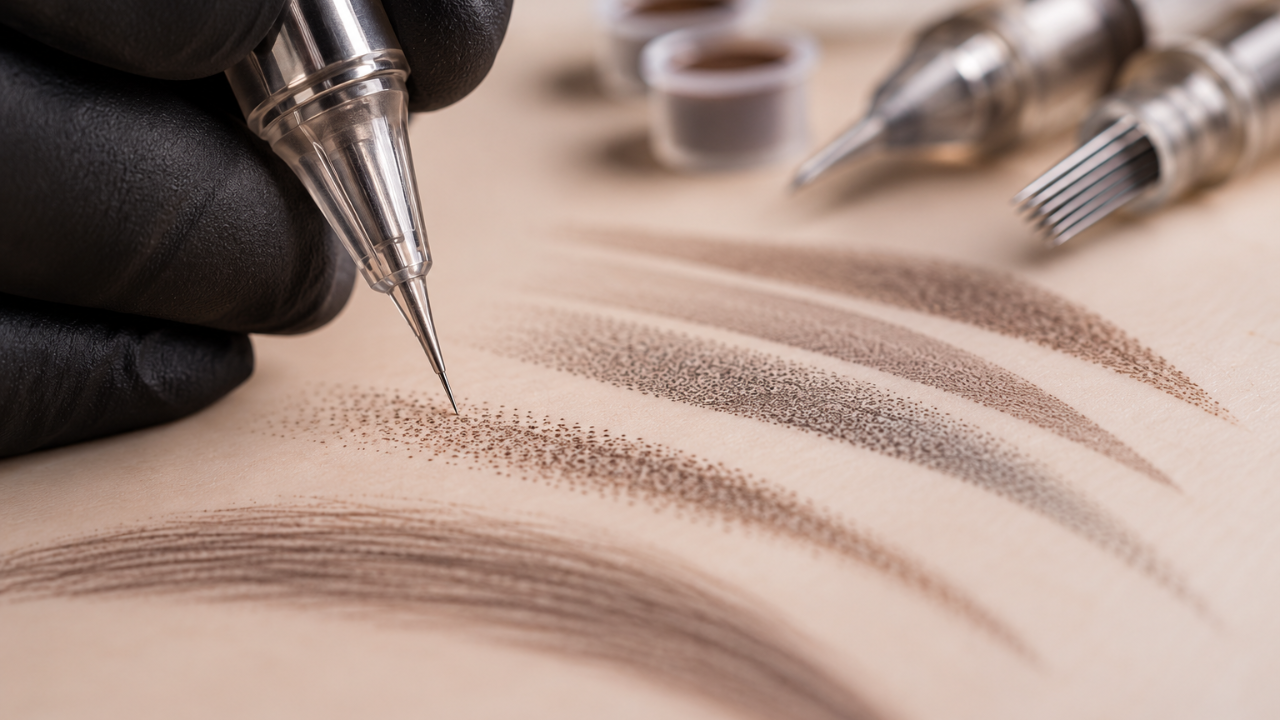
Understanding the Relationship Between Needles and Skin Space
I often talk about the importance of skin space.
Skin space is the visible, untreated skin that remains between deposited pigment particles or areas of shading. It's one of the elements that can give permanent makeup a softer, more dimensional appearance.
But creating that space consistently takes intention.
Needle configuration, diameter, taper, hand movement, pressure, and layering all influence the finished result.
A single needle can create beautiful, delicate pixels. A magnum can distribute pigment across a wider area with fewer individual movements. Neither is automatically better.
What matters is understanding how each needle behaves in the skin and selecting the right tool for the result you're trying to achieve.
Why I Believe in Combining Needles
I've always encouraged artists to expand their needle knowledge rather than become attached to one configuration.
A single needle offers precision and control. A small round grouping may offer a different distribution of pigment. A curved magnum can be useful for creating soft, airy background shading.
By combining configurations thoughtfully, we can create texture and dimension without relying on one needle to accomplish everything.
That doesn't mean using more needles simply because we can.
It means knowing when to switch tools, when to layer, and most importantly, when to stop.
Mature Skin Teaches Us Valuable Lessons
Working with mature skin has reinforced this philosophy throughout my career.
Skin changes with age. Elasticity, thickness, texture, and the way tissue responds to repeated passes can all vary.
Heavy saturation isn't always the most flattering approach, and unnecessary passes may increase trauma.
I've found that soft, intentional pigment placement, careful layering, and respecting the skin often produce the aesthetic I'm looking for.
Of course, every client's skin is different. Technique must always be adapted to the individual.
The Artist Still Matters More Than the Needle
We can spend hours discussing needle diameter, taper length, configuration, and machine settings.
And we should. Those details matter.
But a needle doesn't create artistry on its own.
The artist determines the depth, pressure, movement, spacing, and amount of pigment being deposited.
Two artists can use the exact same needle and produce completely different results.
That's why understanding needle behavior is so important.
The goal isn't to master one needle. It's to understand enough about needles to make better artistic decisions.
Keep the single. Add the combo. Own the signature.
— Jill Hoyer
Inside Needle Knowledge