
The Advantage of Needle Groupings
The Advantage of Needle Groupings
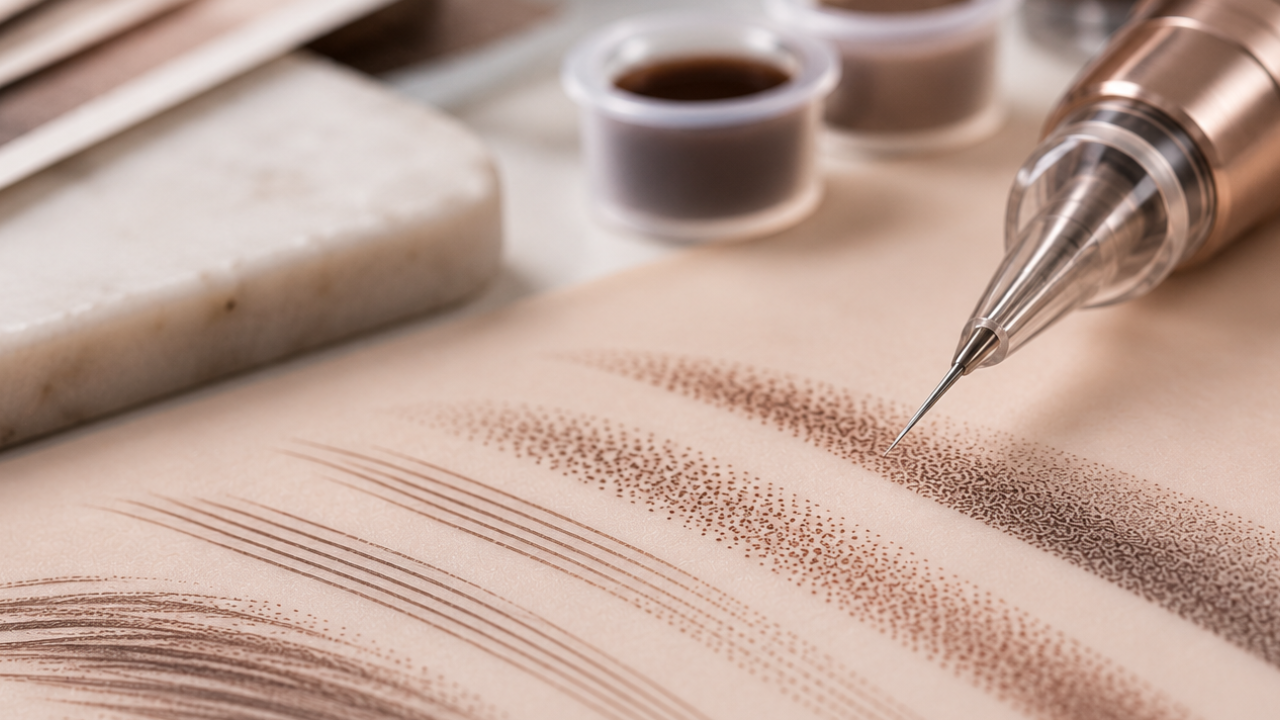
Multiple-needle configurations offer something different.
A round shader, for example, distributes pigment differently than a single needle. A curved magnum can cover a wider area while allowing the artist to build soft, transparent layers.
This doesn't mean larger groupings are automatically less traumatic or more efficient in every situation.
Needle diameter, taper, spacing, depth, pressure, machine speed, and hand movement all influence how a configuration performs.
But when selected thoughtfully, groupings can help us accomplish certain tasks without relying on hundreds of individual single-needle movements.
The goal isn't simply to work faster. It's to work more intentionally.
Think in Layers, Not Just Needles
One of the approaches I've come to appreciate is combining needle configurations within the same procedure.
For example, a single needle might be used to establish delicate definition or a foundational pattern.
A curved magnum might then be used to introduce soft background shading, creating a different texture and distribution of pigment.
The result can be a beautiful combination of precision and softness.
It's similar to painting.
An artist wouldn't necessarily use the smallest brush to paint an entire canvas. Different brushes serve different purposes, and the way they're combined contributes to the finished work.
Permanent makeup is no different.
Skin Space Still Matters
Whether we're using a single needle or a grouping, I believe one of the most overlooked elements of soft permanent makeup is skin space.
It's tempting to keep adding pigment until an area looks completely filled.
But especially when working toward a soft, transparent result, leaving some visible skin between areas of pigment can be part of the design.
This requires us to think beyond simply depositing color.
We need to consider pigment distribution, layering, healed results, and how our patterns interact with one another.
A beautifully executed soft brow isn't necessarily the one with the most pigment.
Sometimes it's the one where the artist knew exactly where to leave it out.
More Tools, More Artistic Possibilities
I don't believe artists need to abandon the single needle.
Quite the opposite.
I believe we should continue mastering it while expanding our understanding of what other configurations can offer.
Learn how a single needle behaves.
Explore how a round shader distributes pigment.
Understand how a curved magnum responds to different movements and angles.
Then consider how these tools might complement one another.
Of course, introducing a different configuration requires appropriate training, practice, and an understanding of safe pigment placement.
But developing that knowledge gives us more options when working with different skin types, treatment areas, and artistic goals.
Developing Your Own Signature Technique
One of the most rewarding parts of being an experienced artist is developing a technique that truly feels like your own.
That doesn't happen simply by following the latest trend.
It happens through observation, experimentation, education, and understanding why certain tools produce certain results.
Single needles are wonderful.
But they're only one part of a much larger conversation about needle knowledge.
The more we understand our tools, the more freedom we have to create the results we envision.
Keep the single. Add the combo. Own the signature.
— Jill Hoyer
Inside Needle Knowledge